Showing posts with label Parent Resources. Show all posts

Great Article: Three easy ways to get your kids to read better and enjoy it


Love this article by Ryan Spencer that I saw go by on my Facebook feed recently. I love it because it's a concise way of telling parents how to help their kids right now. I also love that he used the term "instant word factory." Do you ever find yourself doing that? Spitting out each word that your child has trouble with? I've definitely had my moments. Sometimes it becomes necessary, when I notice that a child is in a book that's way harder than either of us anticipated. Most of the time, though, I notice the power in staying quiet and seeing what happens. Sometimes it's harder, but it really is the best thing.

Post Discovery: Great Struggling Reader Tips

A fabulously written post about helping your reader! Find it here on IThinkWeCouldBeFriends.com. I love the author's suggestions, especially having kids read to younger relatives or friends. It's great to have a baby around and have them read board books with simple words and pictures. They get the words solid in their learning memory while having a fun interaction with someone little. Great confidence builder! I know some libraries have programs where you can go read to dogs now, too!

These are GREAT ideas to help your child become a better reader! School is so much easier if they can read well :)

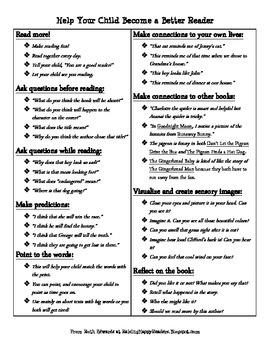
Parent Tip Sheet for Reading at Home

I've been using this parent tip sheet for my parent workshops and in my classroom. I love it because it is a very accessible way to understand how you can help your child interact and comprehend what they read. We had the discussion recently about how some parents want to read the entire book with no interuptions because that's how they think it "should"be done. It is in fact the opposite of what should be done. Educators researched what good readers do and they found that good readers are constanly interacting with their reading. If you pay attention to yourself while you're reading, you'll find that this is true. You ask yourself what a word means, you catch yourself if you're mind is wandering, you reread a part that was confusing. It's an interactive process. Hope you enjoy this handout! It's available for free download here at Teachers Pay Teachers. You have to sign in to get an account, but it's super easy. I encourage you to search for other fun free downloads at that site, too!! There are amazing treasures to be found!
Parent Tip Sheet for Reading at Home

What can you do before or instead of sounding it out?!?

5 things kids need before they can sound it out 5 things kids need... before theyre ready to sound out words
Another great post from Anna over at The Measured Mom that you simply must check out if you've got a little person beginning to read or going in that direction. So often, as parents, all we remember as children was being told to "sound it out," so we tend to rely on that as our sole teaching strategy when helping our kids read. Anna does a great job in this post helping you understand all of the knowledge that has to come before they're ready to sound something out. Also, it's really important to use many reading strategies when a child gets stuck on a word. I need to do a longer post on this but, here's an example of a picture from Literacy Links that you can print out and use to encourage your child to try different things if they're stuck on a word. There are also lots of sheets like this available on Teachers Pay Teachers like this one for free or for a small cost.

Finding the Right Preschool


I've been delving into the subject of preschool lately to help parents of young children navigate the definitely overwhelming and sometimes anxiety-producing preschool decision. I am a huge proponent of preschool and play. If you'd like to read more about the importance of play, you can check out my post on play here. With the way kindergartens are being turned into the new academic first grade, preschool is truly the last chance for kids to just enjoy themselves and play. A ton of learning takes place during that enjoyment and play, too!!

I will also tell you without any hesitation that if you are a stay-at-home mom, there is no shame in wanting a few hours off!! If you don't think you need a few hours off, then you are probably in the most dire need of time away from your children. The first year I sent my son to preschool I knew he would've been more than fine at home with me, but I knew we BOTH would benefit from him going to a quality preschool. He would benefit from exploring things that I didn't have at home, learning social skills, and focusing on subjects that are not necessarily my favorites (science and math, anyone?). I would benefit from having a little breathing room to be still and be at home by myself. That alone time definitely saved my sanity and I didn't even have to feel guilty because I knew he was having a great time learning while he was away.

I have found some great resources on the web that I'd love to share with you. If you have any others I should know about, please comment!

The blog Teach Preschool is an excellent resource for all kinds of things during your preschool search. I love this post she did about how to select a preschool: Choosing the right preschool for your child.

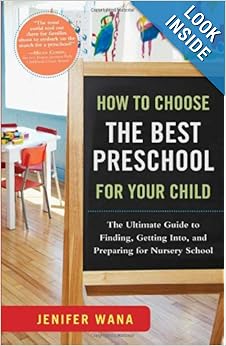
I've actually been surprised by the lack of books out there, but this one seems to be the most popular and thorough on the subject...


I just found out about an ebook and some other posts over at Teach Mama. She has written a book called The Preschool Journey Ebook that sounds wonderful. My Thoughts on Preschool is a good place to start on her site.
The Preschool Journey Ebook by Teaching Mama

Learning about your child's needs:
A big "ah-ha" moment that I had during my search for my son's preschool was that I needed to look for the best school for HIM instead of what I would've loved as a child. The first preschool I toured appealed to me so much because it was sweet and little and quiet. All of the things I was as a child, but not necessarily what my very active young boy would benefit from. To help you with this task, I found some interesting notes on determining your child's personality. Not that you'll know right away or have to pick one, but it's better to go into the preschool search knowing your child as well as possible. 

Learning about the different kinds of preschools:
Of course, you are going to have your own opinions about religious schools and proximity to your home or work. Beyond that, Babble has a great Preschool Guide that not only helps you learn the difference between Montessori, Waldorf, child-centered, and teacher-centered among others, but it has quotes from real parents about each kind. Love it!  There's also a great post on co-op preschools called The ABCs of Cooperative Preschools. SavvySource.com and Naeyc.org are good sources for finding preschools in your area. 

Learning about your homeschooling options:
If you've been considering homeschooling for preschool, there has never been a better time to do it. There is such a huge wealth of resources available through teacher, parent, and homeschooling blogs. Two favorites I would send you to immediately would be The Measured Mom and This Reading Mama, but there are just tons out there if you start searching. Here are some great posts to get you started:

Learning what to look for in a quality program:
I would not recommend bringing all of these checklists with a clipboard on your tour. Perhaps just one will speak to you and help you look at what you need. My tip is always to look at the art you see on the walls. Does it all look exactly the same? Ideally you want child-created art where they can pretty much do whatever they want. I loved that my son's school had an art area in their big play yard so kids could do art on their own at any time. 

Advice from those who have gone before you:
The Things My Friends Didn't Tell Me About Preschool

Getting ready for the big day:
Preschool Prep: How to Prepare Your Toddler for Preschool
Expert Advice for Preparing Your Child for Preschool
This list from a Montessori school is perhaps a little "ideal" and high reaching in it's hopes - I think some of the things they say your child should have to be ready for preschooler are actually things they need to continue working on in preschool. Preschool and Kindergarten Readiness Checklist. 

I know it's such a stressful process because you want to make the perfect choice for your child. The good news is that the reseach shows that prepared children will do well in preschool no matter what kind of preschool you choose. Hopefully that will help you relax a little bit. Good luck and good wishes!!

The Case for Play


As a mother of a former preschooler, I have great compassion for those of you going through the process of selecting a preschool. Hopefully I can provide some helpful resources for you. The first thing I'd like to share is a compilation of writing about the importance of play, especially in preschool situations.

The Case for Play and Problem Solving in Early Childhood Classrooms – Some snippets from the web

“On the other hand, a child is more likely to have better mental health, stronger relationships, and more success in school and work if he has many chances to strengthen his social competence by playing, talking, working out disagreements, and collaborating with peers and adults.
Much research suggests that pretend play can contribute to young children’s social and intellectual development. When children pretend to be someone or something else, they practice taking points of view other than their own. When they pretend together, children often take turns and make “deals” and decisions cooperatively. Such findings suggest that children in early childhood programs ought to have regular opportunities for social play and pretend play. Teachers can observe and monitor the children’s interactions.”

http://www.casel.org/
“One of the risk factors for not having a successful transition to kindergarten is the characteristics of kindergarten and first grade classes (e.g., large class sizes, fewer parent-teacher meetings can make the transition more difficult). Emotional and social competency can be defined and measured. For example, a description of a socially and emotionally healthy child, ready
for kindergarten, could be a child who is confident, friendly, has  good peer relationships, tackles and persists at challenging tasks, has good language development, can communicate well, listens to instructions, and is attentive.”

“It turns out that all that time spent playing make-believe actually helped children develop a critical cognitive skill called executive function. Executive function has a number of different elements, but a central one is the ability to self-regulate. Kids with good self-regulation are able to control their emotions and behavior, resist impulses, and exert self-control and discipline.

Poor executive function is associated with high dropout rates, drug use and crime. In fact, good executive function is a better predictor of success in school than a child's IQ. Children who are able to manage their feelings and pay attention are better able to learn. As executive function researcher Laura Berk explains, "Self-regulation predicts effective development in virtually every domain."

According to Berk, one reason make-believe is such a powerful tool for building self-discipline is because during make-believe, children engage in what's called private speech: They talk to themselves about what they are going to do and how they are going to do it.
"In fact, if we compare preschoolers' activities and the amount of private speech that occurs across them, we find that this self-regulating language is highest during make-believe play," Berk says. "And this type of self-regulating language... has been shown in many studies to be predictive of executive functions."
And it's not just children who use private speech to control themselves. If we look at adult use of private speech, Berk says, "we're often using it to surmount obstacles, to master cognitive and social skills, and to manage our emotions."
Unfortunately, the more structured the play, the more children's private speech declines. Essentially, because children's play is so focused on lessons and leagues, and because kids' toys increasingly inhibit imaginative play, kids aren't getting a chance to practice policing themselves. When they have that opportunity, says Berk, the results are clear: Self-regulation improves.
"One index that researchers, including myself, have used... is the extent to which a child, for example, cleans up independently after a free-choice period in preschool," Berk says. "We find that children who are most effective at complex make-believe play take on that responsibility with... greater willingness, and even will assist others in doing so without teacher prompting."
Despite the evidence of the benefits of imaginative play, however, even in the context of preschool young children's play is in decline. According to Yale psychological researcher Dorothy Singer, teachers and school administrators just don't see the value.
"Because of the testing, and the emphasis now that you have to really pass these tests, teachers are starting earlier and earlier to drill the kids in their basic fundamentals. Play is viewed as unnecessary, a waste of time," Singer says. "I have so many articles that have documented the shortening of free play for children, where the teachers in these schools are using the time for cognitive skills."
It seems that in the rush to give children every advantage — to protect them, to stimulate them, to enrich them — our culture has unwittingly compromised one of the activities that helped children most. All that wasted time was not such a waste after all.
THE BENEFITS OF PLAY
Play allows children to use their creativity while developing their imagination, dexterity, and physical, cognitive, and emotional strength. Play is important to healthy brain development.
It is through play that children at a very early age engage and interact in the world around them. Play allows children to create and explore a world they can master, conquering their fears while practicing adult roles, sometimes in conjunction with other children or adult caregivers.
As they master their world, play helps children develop new competencies that lead to enhanced confidence and the resiliency they will need to face future challenges.
Undirected play allows children to learn how to work in groups, to share, to negotiate, to resolve conflicts, and to learn self-advocacy skills.
When play is allowed to be child driven, children practice decision-making skills, move at their own pace, discover their own areas of interest, and ultimately engage fully in the passions they wish to pursue.
Ideally, much of play involves adults, but when play is controlled by adults, children acquiesce to adult rules and concerns and lose some of the benefits play offers them, particularly in developing creativity, leadership, and group skills.
In contrast to passive entertainment, play builds active, healthy bodies. In fact, it has been suggested that encouraging unstructured play may be an exceptional way to increase physical activity levels in children, which is one important strategy in the resolution of the obesity epidemic.
Perhaps above all, play is a simple joy that is a cherished part of childhood.
Children’s developmental trajectory is critically mediated by appropriate, affective relationships with loving and consistent caregivers as they relate to children through play. When parents observe their children in play or join with them in child-driven play, they are given a unique opportunity to see the world from their child’s vantage point as the child navigates a world perfectly created just to fit his or her needs. (The word “parent” is used in this report to represent the wide range of adult caregivers who raise children.) The interactions that occur through play tell children that parents are fully paying attention to them and help to build enduring relationships.
Parents who have the opportunity to glimpse into their children’s world learn to communicate more effectively with their children and are given another setting to offer gentle, nurturing guidance. Less verbal children may be able to express their views, experiences, and even frustrations through play, allowing their parents an opportunity to gain a fuller understanding of their perspective. Quite simply, play offers parents a wonderful opportunity to engage fully with their children.
Play is integral to the academic environment. It ensures that the school setting attends to the social and emotional development of children as well as their cognitive development. It has been shown to help children adjust to the school setting and even to enhance children’s learning readiness, learning behaviors, and problem-solving skills.

Social-emotional learning is best integrated with academic learning; it is concerning if some of the forces that enhance children’s ability to learn are elevated at the expense of others. Play and unscheduled time that allow for peer interactions are important components of social-emotional learning.

Great Deal on National Geographic Little Kids Magazine!

Just $12: National Geographic Little Kids 1-Year Subscription (Ages 3-6)
I love to encourage parents to get magazine subscriptions for their kids. It's a great exposure to non-fiction plus all of the comprehension strategies like questioning and predicting. I find it's a nice way to force myself to read a different kind of book to my son every month or so. Reluctant readers also seem to respond better to fun magazines and comic books sometimes. Plum District has a great sale right now for a $12 year long subscription to National Geographic Little Kids and you can get another 20% off if you enter the code NovBestsellers. You can go to Plum District or click here to find the deal. We really like this magazine. It's nice and short for younger readers plus it comes with collectible animal cards in the middle of each one. It's also a great idea to ask for a magazine subscription for the holidays from relatives. It is so fun to get kids excited about receiving something to read in the mail! Amazon can also be a good place to get good deals on magazine subscriptions.

Some other good choices for younger kids are:

Babybug - great for little fingers because it's made of tougher paper
High 5 - younger version of Highlights
Ranger Rick Jr. - younger version of Ranger Rick
Turtle
Lego Club Jr. (free!! if you sign up at Lego.com)
Sports Illustrated for Kids - not super exciting for us and written for a little older than kindergarten level, but great if you have a really big sports fan in your family!

Happy Reading! Please share if you have other favorite magazines that I missed.

Great Idea for Books During the Holidays from Delightful Children's Books

A Bookish Advent Calendar | Delightful Children's Books
I just read this great idea from the Delightful Children's Books blog about creating a book Advent Calendar this year. Love it! I hope you check it out. I had a friend who told me about something similar long ago where she would gift wrap all of the Christmas books and allow her boys to open one per night. But I like the idea of numbering them like an Advent calendar, too! I find myself looking for fun used holiday books all year round to add to our collection. It's great to get them from the library but it's extra fun to cultivate a collection of your own oldies but goodies. You could practically only collect Jan Brett books and you would be set. She has fabulous winter and Christmas themed books like The HatThe Mitten, and Christmas Trolls.  My first graders always used to love to look for Hedgie the hedgehog in each of her books. She also has an outstanding author website at janbrett.com. Lots of coloring pages and info about her newest books. I hope that you are starting to collect at least a small amount of books to pull out for each major holiday. I keep mine in a file cabinet drawer and we pull out the new ones at the beginning of that holiday's month. That way, it keeps everything fresh and new while you provide another reason to learn new vocabulary and get excited about books. Happy Reading! 

The Measured Mom's Tips and Tricks for Teaching Emergent Readers + Great Battle Bunny Book Talk!!

tips and tricks for teaching emergent readers
To go along with the last post I did about finding those "easy" books for our earliest readers, I am thrilled to share an excellent explantation of emergent readers by The Measured Mom. She did a guest post about this on another great site, Teach Mama. Please go visit the post here and print out your free books! 

I think it's hardest for parents to understand the beginning reading process because when we think of reading, we picture a kid reading The Cat in the Hat or another kid's book. It's hard sometimes to see the value or interest kids will have in those teeny little boring books. Yes, I've had many a parent tell me those little books are boooorrrriiiiinnnnggggg. All I can tell you is that I have never thought those books were boring because I look at them as little treasure chests holding such great possibility for our little readers. Your attitude does play a huge part in your book choices and your child's attitude about books, so try to give the little easy books a chance. I must admit, they are getting better as educators realize that high interest subject matter is super helpful in engaging young children (especially boys!!). I also can honestly tell you that I have never had a child complain to me that those little books are boring. They get excited to actually be able to read a book and they don't seem to compare them to the bigger "real" books like adults do. So don't be afraid to show a little love to the emergent readers!

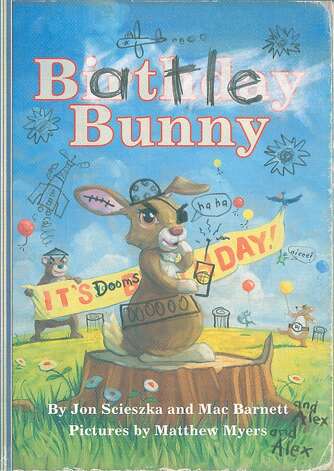
This also brings me to a new book I heard about over the weekend called Battle Bunny. 
Bay Area picture book author Mac Barnett has co-written a new book, "Battle Bunny," with his writing idol, Jon Scieszka. The two were at a reading in New York on Sunday and will be appearing together in the Bay Area next week. Photo: Rebecca Smeyne
The people on the radio station giving the review could not stop talking about how much they loved this book. It sounds hilarious and like a great idea to share with kids. What happens is that a child gets the somewhat lame book Birthday Bunny for his birthday and then he changes it all around to become Battle Bunny. It may be because I have a six-year-old boy who would completely love this book, but I can't wait to get it! Of course, the teacher and children's librarian in me cringes a teeny bit at encouraging children to color all over books, but in the right context it can be a great encouragement for imagination and writing. So, if you do end up wanting to change around some of those little books, you can always create your own versions! What is so genius about the author of Battle Bunny is that he actually has the whole Birthday Bunny book at mybirthdaybunny.com so you and your child can make your own version! So great!  For those of you who live close to me, I just ordered three copies. So the first two people to email me and tell me you read this post, I will give your child a copy for free!

New Way to Practice Sight Words from Frog Spot

Frog Spot Blog
I just discovered this fun blog from a teacher in Australia. She has a bunch of resources available on Teachers Pay Teachers as well as some freebies on her own website. Her Flip Flap Puzzle Paste worksheets are super appealing to kids (and to me!). Plus they're a great way for them to start to recognize words they need to know. She has super cute word family houses she's created and she even has them for numbers, too. If you visit her website, you can get the sight word sheet pictured below for free!

Great Handwriting Suggestions from Urth Mama

Best iPad Apps to for Kids to Practice Handwriting. From a homeschool mom who has tried hundreds of apps!
I just came across the Urth Mama blog's great post on handwriting apps. The only one I've tried is Wet-Dry-Try from Handwriting Without Tears, but they all look really good. Click here to check out her great reviews!
The other great find from her post is this stylus made for kids using the iPad! It's listed on Amazon here. I've been really wanting something like this so my son can practice his correct pencil grip while practicing handwriting.

Free Printable Books for Fall!

Happy Fall, dear blog readers!

No doubt school and children are keeping you as busy as they are keeping me. Here's a fun site I wandered around this week called Mrs.Wills Kindergarten. She is offering up some fun things for the fall season in including a free printable book that would be perfect for your very beginning readers. Check out her site here to enjoy the free printable!

Another site that I have loved this week is ReadingA-Z.com. It has lots of interesting sister sites and great info for teachers, but is very applicable to parents as well. They have some free downloads on the site itself, but you can have access to everything for a week for free if you sign up for their free trial. It is well worth it because you can print out a bunch of high interest books for your readers. I found a great Space book and another about sharks that my early reader will love. They even have printable worksheets for working with comprehension, word work(phonics), and vocabulary. If you're not sure what Guided Reading Level your child is reading at, you could take the assessment with them over at Pioneer Valley Books or start with Level A because that is the easiest and go from there. Remember, for a book to be "just right" for your child, they should know around 95% of the words. If you're struggling through the whole thing, it is TOO HARD.

Reading Ideas for Toddlers in Constant Motion

Thankfully, my son is now out of the phase where I couldn't even take a picture of him being still. There was always movement when he was a toddler. I've had many parents ask me how they are supposed to sit and read with their toddlers for any length of time. Here are my suggestions:

1. Embrace Reality (Adjust Your Expectations)
You are going to immediately be in trouble if you want your reading time to match a picture in your head of a child happily cuddled on a peaceful parent's lap with a pile of books. Close the door to the bedroom so you have your toddler in a confined space. Child door locks can be your friend in such instances. They may not look like they're listening to you read, but that's okay. They can get up and wander if they want. You can still try to engage them now and again with questions or show them a neat picture.

3. Embrace the short book
This is not time to prep your little cutie for Harvard by reading chapter books. Keep the books short and sweet. Some board books are just longer books for older children in board book form. Bypass those and go for the ones with a few words per page at most. Don't take it personal if your toddler wants to shove a book out of your hand halfway through. It's okay. You don't have to finish every book. When they're a little bit older, you can work on the follow-through skill. Right now, it's not important. If they're interested, they'll let you keep reading.

4. Embrace books with real pictures, flaps, smells, and different textures
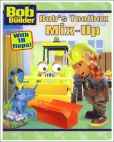
Your child is in a state of constant exploration, so what a great way to get them interested in books by exploring. It keeps their attention and teaches them that books can be fascinating. Where else can you find little squares of shag rug and shiny mirror material in the same place other than a disco or roller rink?!? Bob the Builder has some super awesome Life-the-Flap board books. Below is our very favorite, Bob's Toolbox Mix-Up. Babies and toddlers are also extremely interested in books that mirror their lives and what they look like. Some of our favorites were simple real pictures of babies and things that babies play with.
Bob the Builder: Bob's Toolbox Mix-Up

5. Embrace books that involve songs and/or movement
The reason I decided to write this post is that I recently discovered an excellent series of books for toddlers involving yoga moves. I read the books while I was over babysitting one of my favorite toddlers, and he surprised me by doing every single yoga pose in the book. What surprised me more was how natural and perfect for toddlers each of the poses were. There's Sleepy Little Yoga and Little Yoga: A Toddler's First Book of Yoga. Other books like Little Bunny Foo Foo, where you can sing and do movements, can also be very entertaining for the little ones.

6. Embrace Humor
If you can find a book that's silly, you will have your child's attention. Anything that makes them giggle or laugh is one they will want to revisit over and over. Bob the Builder's Tool Mix-Up has some silly parts in it. What Shall We Do with the Boo-Hoo Baby is another fun one. Luckily, there are lots of board books out there that embrace fun. You also have to remember YOUR sense of humor. Don't ever get tense around books, as Mem Fox likes to say. Enjoy the craziness that is your toddler running around the room as you read. It won't last for long.

7. Embrace Repetition
Yes, you are going to find a few all-out favorite books that your toddler will want you to read over and over. That is a fantastic thing to do. It helps cement vocabulary, syntax, and the rhythm of language for your child. Plus, it's one of the very few times where they can feel like an expert. Children LOVE reading stories over and over again because they know what's going to come next. This happens so rarely in their little lives that this a great opportunity for them to feel some control and pride.

8. Embrace Your Toddler!
I can't resist mentioning this rule. Give lots of hugs and love when you have reading time (that is, if you can catch them!).  As long as they associate reading with fun and love and laughter, you've done your job!

Need some more ideas? Check out this article, "Reading Tips for Parents of Toddlers"  from ReadingRockets.org.

Lazy Summer Reading Ideas


Sometimes we all need a little help to get moving with summer learning. Here are some great (mostly free) ideas I've come across recently. 
Motivation! 
One of the favorite things I've found so far comes from Plenty of Picnics. They're called Summer Brain Time punch cards. I love them because I can say to my son, "Let's do some brain time!" and our reward for that is a punch on our Summer Brain Time card. I say "our" because I need a little motivation to focus on learning, too! Then when we fill out a card, we get to have a treat together like popcorn and a movie or ice cream. Here's the link to print out your very own Summer Brain Time cards! 

Summer Online Resources:
Summer Reading Resources for Kids 2012 from Mom to 2 Posh Lil Divas is an amazing compilation of summer reading programs!!
A Mom with a Lesson Plan: idea for collecting book reports and rewarding with money towards Scholastic book orders in the fall!
Help for Struggling Readers :great compilation of ideas
The Measured Mom: Can You Read 100 Books This Summer? 
Education.com: Do-It-Yourself Summer Reading and printouts
3 Dinosaurs Summer Printable Round Up: Lots of great ideas!
Growing Book by Book Table talk cards - topics to talk about at the dinner table or on a road trip!


Games for Summer:
* Lots more on my Pinterest boards!
Good for all levels:
PirateAttack (readingresource.net): Students discover pirates and treasure by identifying sounds/letters, reading sight words, or defining vocabulary words 
PlayingWith Plates:  Write sight words, word families, vocab words, or letters on small paper plates. Put them on the ceiling or floor and search for them in the dark with a flashlight. Fling them like Frisbees. Throw balls or balloons in them and read the words they land on. Sort the word family plates into words that rhyme (-at family = cat, bat, sat, mat, that).
                                                
MuffinTin Games: From one of my new favorite sites, Growing Book by Book. They are similar to the plate games but using a muffin tin and post-its or paper muffin cups. Use pennies or hard candy to toss into the cups or play a tic-tac-toe type game. 
Treasure Hunt: Hide short phrases around the house so kids can read and follow the clues. You can purchase the game Ukloo to do the same thing.
Pre-Readers:
Memory or matching games with Letters/Pictures/Rhymes
Readinga-z.com and reading-tutors.com have lots of resources for letters, rhyming, and sight words - print out the free samples!

Beginning Readers:
Word Family Mats from The Measured Mom
Zingo Sight Words bingo game:
Product Details

Advanced:

Great Sites for Free Printable Games and Word Lists:
·        Mrs. Perkin’s Dolch Words:  Lists of all levels of sight words plus much more!
·     Flocabulary.com:  Vocabulary word lists, SAT vocab lists, rapping program
·        Teachers Pay Teachers: just search for free items and the grade level you want – don’t be afraid to sign up, it’s easy and free
·        Primary Inspiration
·        Reading Resources
·        The Measured Mom: - sight word easy readers, word family mats, all sorts of good stuff
·        1 Plus 1Plus 1 Equals 1:  Lots of printables, especially for packets with popular themes from toddler to kindergarten level
·        Reading Tutors and Reading A-Z: Many free samples for learning letters and sight words
·        Reading Rockets printable family packets and parent articles

Books to Inspire You:
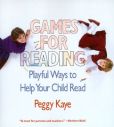
Games for Reading by Peggy Kaye
Games for Reading
Book Love by Melissa Taylor
I Can Teach My Child to Read by Jenae Jacobson
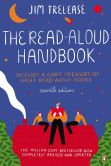
The Read-Aloud Handbook by Jim Trelease
The Read-Aloud Handbook: Seventh Edition
Reading Magic by Mem Fox
Reading Magic: Why Reading Aloud to Our Children Will Change Their Lives Forever


Playing with Plates


Okay people, I am getting down to the bare bones for you. You are a busy parent who has no time to plan out wonderfully enriching ideas for your youngster. Don't worry. I've got your back. All you need is a Sharpie marker and some paper plates. If you need some inspiration on what words to choose, you can check out http://dolch-words.com. If your kiddo isn't ready for sight words yet, use letters. By the way, the importance of sight words is that they are the tricky words you can't always sound out. It is hugely helpful as you learn to read if you can recognize these words by sight.

Option 1:  Go into a dark room and ask your kiddo to find a word with a flashlight. You know they all love using flashlights! Some creative Pinterest people have even mounted words on the ceiling for this!

Option 2: Use pennies or a soft ball to have your kids throw them onto the plates. Whichever ones they land on, they read.

Option 3: lay out a few p,ages while you're reading. Every time you come across one of the words, your child puts a paper clip or penny on the plate. In the spirit of competition, see which word "wins" by showing up the most times in the book.

Option 4: Frisbee time!  If they can read the word, they get to fling the plate. See which word gets the farthest!


Sharing Hilarious Parent Mistakes = Writing Motivation


Sometimes inspiration hits in the oddest of places. As there are many education blogs out there, I always get excited when I think of something quirky that you might not be able to find on ten other sites. Tonight while getting my son's bath ready, I was doing about ten things at once. I decided to fill the sink to soak a few things while filling up the bathtub while helping him clean up his unending Legos. The next thing we know, we're back in the bathroom and there is a flood going on. I had totally forgotten about filling the sink and/or had extremely underestimated how fast it would fill. Probably both. So water was flowing over the counter and spreading out along the floor. Joy of joys. What does this have to do with literacy, you ask?

My son's first question was, "Can I be the one to tell Dad?!?!" He assured me that he was not gleefully trying to get me in trouble but merely trying to transmit some information. Yeah, right. And so this became a great opportunity for using new vocabulary - flood, spilling, soaked, etc.- while practicing his skills of retelling a story in the correct order. Even if he just got to tell the story orally to his father, there would be some literacy merit. However, I would suggest taking it a step further and writing out a glorious and humorous tale of how mom almost flooded the bathroom. If your kiddo is too little to write out a whole story, have them dictate it to you or label and illustrate boxes with order words such as first, second, third, and finally. They just get so excited when we're the ones who mess up, don't they? I can see him being very engaged in this particular writing activity. Not to mention, what a great way to preserve these awesome family memories. He did say it was his favorite part of the day.  

Excellent and FREE Printable Packs for Learning

Printables Packs from 1plus1plus1equals1
I may have mentioned these packs before because they are so great. Wonderful for parents who only have a few minutes but want to do something valuable with their children to keep those brains thinking. I love these packets because they are extremely high interest. There was one on Angry Birds that I did with my 5 year old and he practically begged to get started. Plus, it takes advantage of the prior knowledge kids already have on these subjects, so they are automatically more confident and motivated to learn. I especially like the kindergarten packs I have tried because she includes an easy reader and cut-and-paste activties so we're not just doing worksheets. There are Tot, Preschool, and Kindergarten packs depending on what level you need. Click here to see 1 Plus 1 Plus 1 Equals 1's blog about all of her printable packs. Enjoy! 

Great Early Reading Resources!

I've said it before and I will say it again. I am just astounded and humbled by the amount of amazing work that mom and teacher bloggers are sharing for free on their blogs. I honestly don't know where they find the time to do all of this! Just learned about this fantastic resource from This Reading Mama . It's a Reading the Alphabet Pre K curriculum. Now don't be scared off by the word "curriculum." It doesn't mean you have to put in tons of extra work and preparation time. It just means that someone else has thought about what would work best and in what order. You can pick and choose whatever works for you. Just glancing though it, I saw a cute song to teach the word "the" - grab that if nothing else! Perfect for those of you who want to start reading activities with your little learners but aren't sure where to start. If you click on this post here, you can download all of the files via a zipfile. Thank you, Reading Mama! 

This curriculum is also mentioned in one of my favorite blogs for learning, The Measured Mom. If you have not already subscribed to get her emails, I do not know what you are waiting for. They're perfect for the early learner set. She is starting to create these great, FREE emergent readers for sight words. As you probably know, sight words are those words we just have to learn by sight so we can read them automatically without thinking. When we do, it makes reading soooo much easier. Click here or on the picture for her newest books for the word the
4 more printable emergent readers from the measured mom sight word the 590x740 Free Printable Emergent Readers: sight word the

Easy FREE Printable Books to Learn the Word "A" (Plus a Small Rant About Parent Attitudes)

Such a great way to practice a sight word and get some confidence with easy, printable readers from The Measured Mom. Print yours right now by clicking here! Go! Do it. Her post also gives very helpful instructions on how to read them with your child. Love how she brings up the point that parents are concerned their children will just guess their way through books forever if they don't learn to sound out words right away. So not true! The great children's author Mem Fox said it best when she said that children must almost see themselves as readers and have that confidence before they care to take the time to notice the letters and words. With these easy books, you are helping them see themselves as readers, which is a fabulous gift. 

While we're on this subject, I'd also like to warn you of the insidious poison that is an adult's secret thoughts about easy, simple books. I have had several parents say to me, "ugh, that book is so boring, why would my child ever be interested in that?!?" Sometimes it even includes eye-rolling. Please just compare it to the first toys your infant ever played with. Did you think back then, "Oh man, what a lame ball! It's only green and plastic. Boring. Why does she even care about that stupid ball anyway!?!" Obviously, I jest. But hopefully you get the idea. Babies are fascinated with simple toys because they are new and brilliant and exciting to them. It is the same thing for early readers and these books. They can access them and feel confident because those books are just right for them at this moment. So next time, when you see a super "easy" reader and you're tempted to roll your eyes, stop that thought and get just as excited to share this bright shiny new thing as you were to share a ball with your baby long ago.

Great Book Lists for Beginning Readers

Once again I stand in awe of the work and effort teacher and mom bloggers spend on their blogs. I just found two great lists of books that would be perfect for early readers in that 4-5-6 year old range. Depends on what your kiddo is ready for. Great books to check out of the library for sure! Did you know that most libraries will let you request and hold books for free? That means they pick them all out for you and you just pop in to check them out! In our area, the North Hollywood branch of the Los Angeles Public Library does that (they just charge you if you fail to pick up your holds). These lists are located on a new blog I just found that is fantastic. It's called DelightfulChildrensBooks.com. The first list is 20 Fantastic Books For Kids Learning to Read and the second is 15 More Fantastic Books for Kids Learning to Read. Enjoy and let me know how you like some of them! I myself can't wait to check out the one pictured above.